My bus from Sofia reached around midnight. I got down at the Piata Gara de Nord and walked to Vila 11 Rooms. It was very safe and there weren’t too many people around. I completed the check-in formalities with the host and quickly went to sleep. In the morning, I got ready for my day exploring Bucharest.
I walked to Gara de Nord 1 metro station and bought a City Card for RON 18 from the ticket office. It was not available for purchase from the kiosks. From here, I took the M 1 metro to Piața Unirii 1.


After emerging from the Piața Unirii 1 metro station, I strolled down Bulevardul Unirii, often called the “Champs-Élysées of the East”. Heading westward toward the historic Constitution Square, I walked by the Seasons’ Fountains along the center of the boulevard with their rhythmic cascades.


The humongous Palace of Parliament, was my first stop for the day. This architectural behemoth holds the title of the world’s heaviest building and stands as a symbol of Romania’s history.


From here, I walked to Old Town Bucharest. I saw The Palace of the Deposits and Consignments (CEC Palace) with its French-inspired eclectic architecture. The nearby Zlătari Church and the Brâncovenesc-style Stavropoleos Monastery offered glimpses into the city’s Orthodox heritage.


I saw the neoclassical National Bank of Romania and then walked along the cobblestone streets to Piața Roma. Here, the Lupa Capitolina statue—depicting the she-wolf nursing Romulus and Remus— a gift from the city of Rome, represents the Latin heritage that defines the Romanian identity.


Across the road was The New “Saint George” Church, with a statue of the martyr-prince Constantin Brâncoveanu in the courtyard. This site also had the Kilometer Zero Monument, a symbolic brass compass marking the geographic heart of Romania from which all road distances are measured. I visited the ‘Choral’ Temple, but it was closed and I was only able to get a glimpse of the Moorish-Byzantine facade from the gate.


Walking further, I saw the Statue of Mihail Cantacuzino and the Colțea Church. The “Broken Violin” Fountain was in the nearby Colțea Park. I crossed Pasaj Universitate towards the “Ion Luca Caragiale” National Theatre.


The “Ion Luca Caragiale” National Theatre with its modern facade had a Statue of Ion Luca Caragiale, a tribute to the theater’s namesake. The “Căruța cu Paiațe” (The Cart of Clowns) monument represented the playwright’s beloved characters in a whimsical, larger-than-life bronze ensemble.


I saw Grand Hotel Bucharest, the city’s first true skyscraper. I crossed the Universitate Clock Monument, a timeless landmark that acts as the city’s favorite rendezvous point and the nearby Fountain of Universitate. Tucked away in a nearby passage was the vibrant Umbrellas’ Street, an urban art installation where a canopy of suspended umbrellas transformed a narrow alleyway into a rainbow of colours.


From there I headed to the Kretzulescu Church, an 18th-century Eastern Orthodox masterpiece, with its distinct red-brick exterior. Nearby, the Bust of Corneliu Coposu and the Monument of Iuliu Maniu were tributes to two of Romania’s most significant political figures who fought against totalitarianism.


The Memorial of Rebirth is a striking and controversial 25-meter marble spire that commemorates the victims of the 1989 Revolution.


In Revolution Square, the National Museum of Art, housed in the former Royal Palace, was across from the Equestrian Statue of Carol I, Romania’s first king.


The New & Old Building showcased the juxtaposition of ornate, classical facades—heavy with stone carvings and historical gravitas—alongside sleek, glass-and-steel contemporary additions that reflected the city’s modern evolution.


I saw the Boteanu Church, known for its elegant synthesis of Byzantine and neoclassical styles. A short walk away was the Romanian Athenaeum, the city’s most prestigious concert hall and an ornate neoclassical landmark with a magnificent dome. In front of the Athenaeum was the Statue of Mihai Eminescu, Romania’s national poet.


I took the M 2 from Piața Romană to Piața Victoriei to visit Kiseleff Park. I visited the Romanian Infantry Monument, a tribute to the foot soldiers who defended the nation during World War I. Nearby, the Monument to the American Heroes of the Second World War honors the Allied aviators who fell in Romania during the 1944 missions. The Monument to the Heroes of the Air, a 20-meter Art Deco masterpiece featuring a winged figure, symbolizes the courage of the nation’s early aviation pioneers.


I took the bus from Arhitect Ion Mincu to Arcul de Triumf. The monumental Arcul de Triumf, at the northern end of the city, was my last stop for the day. The towering 27-meter structure is inspired by the design of the Arc de Triomphe in Paris, featuring intricate bas-reliefs carved by famous Romanian sculptors.


From here, I took a bus from Arcul de Triumf to Piaţa Presei Libere]. I got a glimpse of the Aripi Monument that stood in front of the House of the Free Press, a colossal Stalinist-Gothic landmark. Then I took bus 100 from Piaţa Presei to Henri Coandă International Airport which was covered by my City Card.


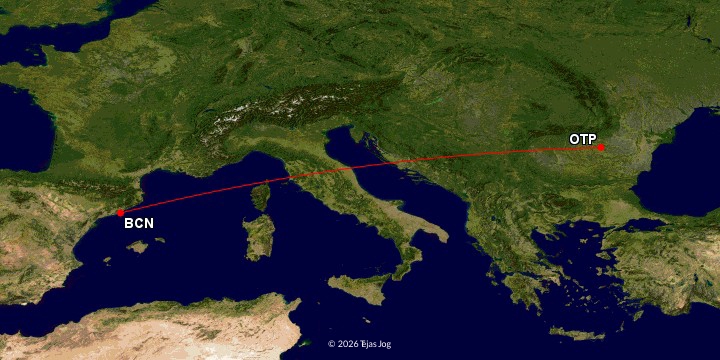
After reaching the airport, I got something to eat at the Carrefour Express there. There was a water bottle refill station which was nice. My flight to Barcelona was delayed but comfortable, and I was able to sleep through most of it after a long day of walking in Bucharest.


🛏️ Vila 11 Rooms
🚇 M1 - Gara de Nord 1 - Piața Unirii 1
🚇 M2 - Piața Romană - Piața Victoriei
🚍203/205 - Arhitect Ion Mincu - Arcul de Triumf
🚍203/205/331 - Arcul de Triumf - Piaţa Presei Libere
🚍100 - Piaţa Presei - Henri Coandă International Airport
🍽️ Carrefour Express
✈️ Wizz Air Malta 3177