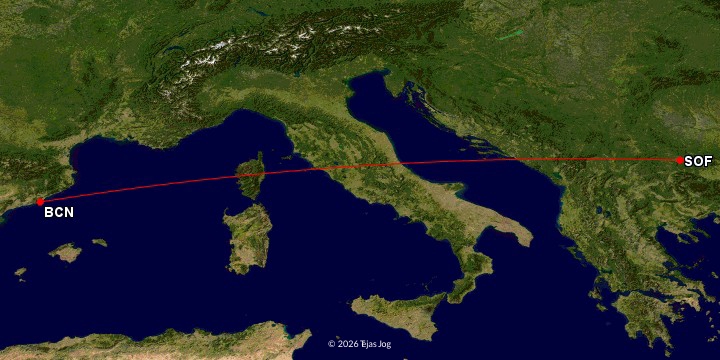
My flight from Barcelona landed around 1:30 AM. I stepped out of the airport and waited at the bus stop for the N4 night bus. There was only one other person waiting for the bus. All the other passengers went by taxis. The N4 night bus arrived at the scheduled time.


There was a female conductor in this bus along with the driver, which I’m sure puts solo female travelers at ease. I was able to use my credit card to pay for the ride. I got down at Pl. Makedoniya and walked to Hostel Mostel. I had reached out to them earlier and they had sent me instruction for self-check-in due to my late arrival.


I got up and got ready in the morning. My first stop was a short walk from Hostel Mostel. The Russian monument in Sofia is an obelisk erected in 1882 to commemorate Russian soldiers who died during the Russo-Turkish War of 1877–1878.


My next stop was the National Palace of Culture (NDK), a brutalist landmark that stood as a massive hexagonal fortress. The ‘SOFIA’ sign was right next to it, a go-to spot for travelers looking to capture a vivid memento of the Bulgarian capital. I also saw the Pillars of NDK, towering steel masts, frequently used as a popular meeting point for locals and a site for soaring flags.


The Monument to the Glagolitic Script was a tribute to the oldest known Slavic alphabet. And nearby, the Berlin Wall Segment stood as a reminder of the Cold War era and the subsequent European unity.


I passed by the Statue of Simeon Radev and the Earth and Man National Museum on the way to my next stop, the Soviet Soldiers Memorial. Located in Garden “Black Peak”, this monument was reminder of WWII history.


Walking back, I refilled my bottle at the Drinking water fountain at Banya Lozenets and the continued across the Lovers’ Bridge towards my next destination, Sofia University St. Kliment Ohridski with its majestic Baroque facade.


On the way, I passed the “Saint Patriarch Evtimii” Garden and saw the The ‘Tug of War’ Statue on the way to the Prince’s Garden. The Soviet Army Monument erected in 1954, was partially dismantled in December 2023. The area around it remains fenced off as officials discuss moving the remaining parts to the Museum of Socialist Art. The SunFest Sofia Ferris Wheel, which opened recently, was the tallest in Bulgaria.


I walked to St. Clement of Ochrid Garden and saw the Monument to the Paratroopers with a soaring bronze eagle, dedicated to the Bulgarian paratroopers who fought and fell during World War II. The Monument to the Bulgarian Aviator next to it stood as a tribute to the Bulgarian Air Force.


Walking further I passed the neo-Renaissance Old National Assembly of the Republic of Bulgaria building. Opposite to it was the Monument to the Tsar Liberator, the equestrian statue commemorating the Russian Emperor Alexander II, who played a pivotal role in Bulgaria’s liberation from Ottoman rule.


My next stop was The Patriarchal Cathedral of St. Alexander Nevsky, one of the world’s largest Eastern Orthodox churches, famous for its massive gold-plated domes and Neo-Byzantine architecture. It was built to honor the Russian soldiers who died during the Russo-Turkish War of 1877–1878. It was magnificent!


The interior was illuminated by massive, ornate chandeliers with intricate mosaics that covered the walls and domes.


The “Greetings from Sofia” sign nearby was a hotspot for all the visiting tourists. The Monument of the Unknown Soldier, featuring an eternal flame and soil from across Bulgaria, honoured the fallen soldiers of the nation and the Lion Sculpture represented the strength and bravery of the Bulgarian people.


I visited the Garden of the Bulgarian Militiamen which was dotted with sculptures and monuments. The Main Astronomical Point of Bulgaria here serves as the fundamental coordinate for the country’s geodetic and mapping systems. Statue “Mauthausen” (Скулптура „Маутхаузен“) in front of it is a tribute to the victims of the Mauthausen concentration camp. The Monument to the Bulgarian Militiamen honors the Opalchentsi, the volunteer army that played a decisive role in the 1877–1878 War of Liberation. Nearby is the Statue “Victory”. The Blinded Soldiers of Tsar Samuil (Скулптура „Войниците на Самуила") is a sculpture depicting the tragic fate of thousands of Bulgarian soldiers who were blinded after the Battle of Kleidion. Nearby was the Church of St. Nicholas the Wonderworker, famous for its golden domes and green roof and Muscovite-style architecture.


I passed by the Ministry of Defense on my way to the next stop the Ivan Vazov National Theatre, a Neoclassical masterpiece famous for its ornate red and gold facade. Walking further I reached The Saint George Rotunda, hidden within a courtyard surrounded by government buildings, this cylindrical brick structure is considered the oldest standing building in Sofia.


The Cathedral Saint Nedelia, an Eastern Orthodox cathedral with a massive central dome and rich interiors was next.


Walking further, I reached the Medieval orthodox temple of St. Petka Samardjiyska. This semi-sunken medieval church is tucked into the underpass, and across from this was the Monument of Saint Sofia, a bronze and copper statue depicting the city’s patron holding a laurel wreath and an owl, symbolizing peace, victory, and wisdom. Turning around, I could see the Neoclassical National Assembly of Bulgaria building which serves as the administrative heart of the Bulgarian government.


I saw the Sofia mosque, Banya Bashi, an example of Ottoman architecture in the heart of the city and the only functioning mosque in Sofia. Adjacent to it was the Central Baths Fountain and the Central Mineral Baths building, with its Neo-Byzantine facade which now houses the Regional History Museum of Sofia. The Thermal Mineral Water Springs there provided naturally hot, 46°C mineral water for drinking.


I had bought a ticket on LikeBus from Sofia to Bucharest earlier in the day. I had received the transaction receipt but had not received the actual ticket. So I walked to the Central Bus Station with time to spare, hoping to find the counter for LikeBus and get the ticket from them but there was no counter there. I then reached out to them by email and WhatsApp with my order number (which was on the transaction receipt) and they sent me the PDF ticket after some time.


Having got the ticket and also with some time on hand, I walked to the nearby Central Railway Station and saw the Mother Monument, a towering bronze sculpture depicting a mother holding a child.


I then went to facefood PIZZA shop for a quick bite. I was famished after a long day of walking around Sofia; this was late lunch and early dinner all rolled into one. The pizza was freshly prepared and nice. I walked back to the Central Bus Station after.


The gate for my bus was 44 and the bus was already parked there by the time I reached. I showed my ticket and boarded. There was no one on the seat next to me so I got more space to stretch out. The bus had WiFi and also USB charging ports at each seat. The journey was comfortable. We stopped at a gas station rest stop before Ruse and then crossed the Danube in to Romania.


✈️ Wizz Air 4406
🛏️ Hostel Mostel
🍽️ facefood PIZZA shop
🚍 LikeBus